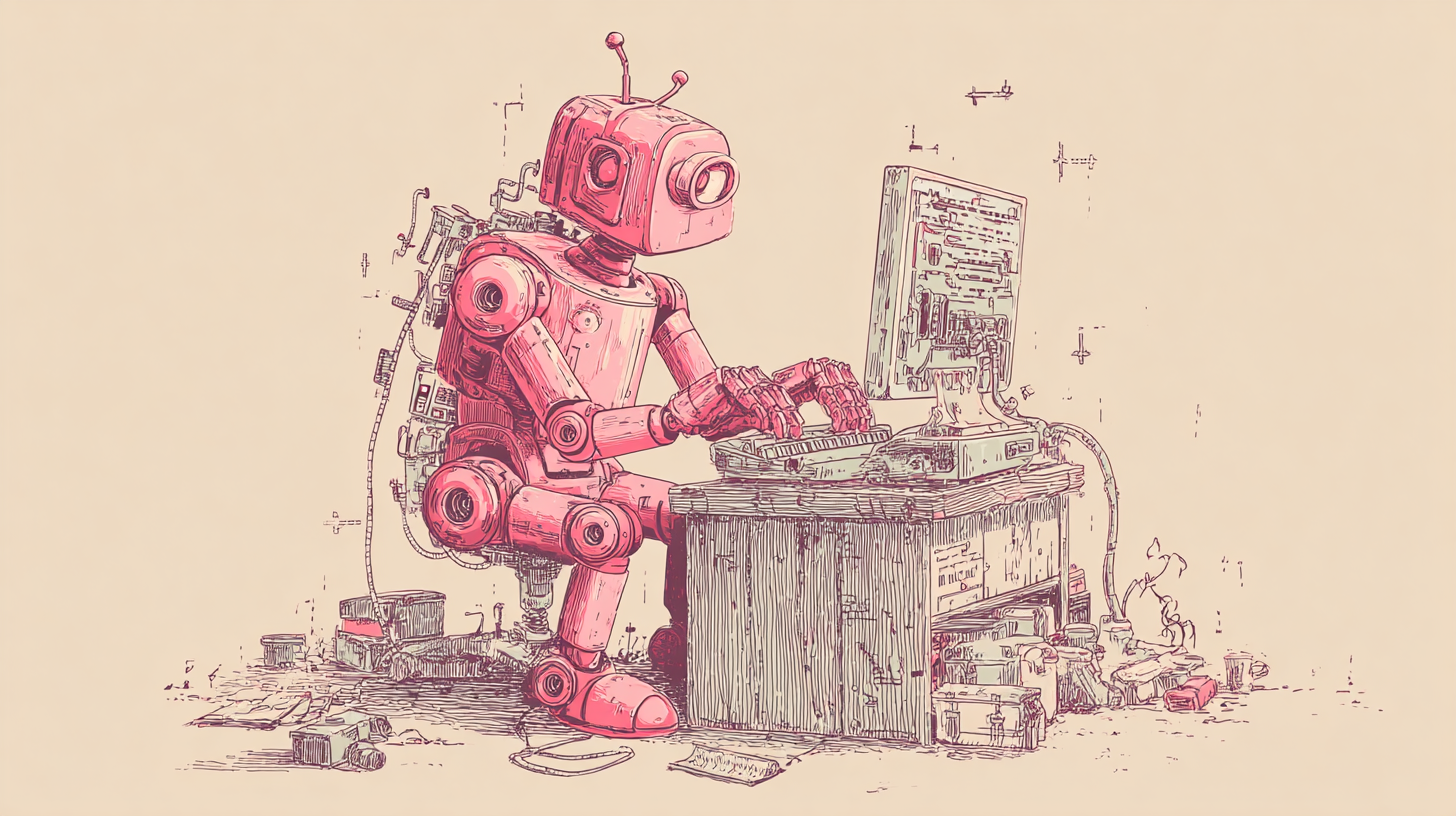
Across industries, organisations are embracing artificial intelligence with a singular, seductive belief: automation will lighten the load. It is the promise of every digital transformation pitch deck - streamline operations, remove drudgery, and free humans for higher-value thinking.
But what has emerged instead is a more uncomfortable reality.
Burnout is rising. Stress levels are escalating. Employees are experiencing a sense of cognitive and emotional strain that feels disproportionate to the supposed efficiencies AI provides. The assumption that automation would simplify human work has collided with a structural truth I have observed over 18 years of digital transformation: Speed, once introduced, becomes difficult to contain.
AI accelerates the system, not the human. And when the system outpaces the human, exhaustion is not an anomaly. It is the mathematical inevitability of mindless adoption.
The Myth of Reduced Workload
The belief that automation reduces workload is intuitive, but historically inaccurate. When calculators emerged, we did not reduce the number of financial analyses performed; we increased them. When email streamlined communication, we did not communicate less; we communicated incessantly.
AI follows this same pattern but at an unprecedented magnitude. It compresses tasks from hours to minutes, and organisations instinctively recalibrate expectations around the new pace.
In practice, this looks like Speed Inflation:
- The Task Multiplies: "Since the AI drafts the report, let's create five variations instead of one."
- The Deadline Tightens: "If the code generation is instant, can we deploy by end of day?"
- The Standard Escalates: "We know what is possible now - why didn't you go further?"
Output expands while cognitive capacity remains constant. Employees begin to experience the displacement of boundaries: the sense that there is always something else they could produce, because AI has removed the practical constraints that once protected their time.
The Maintenance Trap: Lessons from Test Automation
This is not a new phenomenon; it is just a faster one. We saw this clearly during the industry-wide shift to Test Automation Frameworks.
The promise was simple: automate the testing scripts, run them overnight, and free up QA engineers. But the reality was different. The "automated" suite required constant maintenance. Scripts broke when UI elements shifted pixels. Data sets needed perpetual cleaning. The engineers didn't stop working; they just shifted from doing the testing to servicing the robot that did the testing.
We are seeing the same dynamic with Generative AI.
- Delivery Leads automate status reporting, only to spend hours reconciling the AI’s hallucinated project risks with reality.
- Marketing Teams generate 50 blog posts in an hour, only to spend three days editing the "soulless" tone out of them.
- Developers use AI to write code faster, but spend double the time debugging complex, opaque logic they didn’t write themselves.
This is the Maintenance Trap: We didn't automate the work. We just changed the job description to "AI Supervisor," without adjusting the timeline or the headcount.
The Maintenance Trap: Workflow Shift
From Creation to Verification: How AI Changed the Job
View complete data visualization with all sections
The Pride Gap: When Efficiency Kills Morale
There is a quieter, more insidious cost to this acceleration: The erosion of ownership.
When a human labours over a piece of code, a strategy deck, or a creative campaign, there is a "sunk cost" of effort that translates into pride. "I made this." That pride is the fuel for resilience. It’s what keeps morale high during crunch time.
AI severs the link between effort and output. When the machine produces the draft in seconds, the human operator becomes a verifier, not a creator. They are no longer the architect; they are the quality control inspector.
This creates a Pride Gap. The work gets done, but the emotional payoff - the dopamine hit of creation - is gone. Employees begin to feel like cogs in a machine that is smarter than they are. They question their value. They detach. And a detached workforce burns out faster than an overworked one, because they have lost the meaning behind the struggle.
The Leadership Disconnect
Why is this happening? Because the strategy is being set by people who aren't using the tools.
According to data from Mindflow, 63% of employees attribute leadership's reluctance to properly adopt AI tools to "digital illiteracy."
Leaders buy the software assuming it works like a dishwasher - load it, press a button, walk away. They do not see the Invisible Emotional Labour required to make AI work:
- The anxiety of verifying machine outputs.
- The pressure to "up-skill" in real-time while delivering business-as-usual.
- The decision fatigue of having infinite AI-generated options.
This isn't a technology problem. It is an empathy problem.
A Framework for Conscious AI Integration
To fix this, we must stop treating AI adoption as a technology rollout and start treating it as a behavioural redesign. We need a Conscious AI Framework that protects the human operating system from crashing.
1. Slow Down to Speed Up (The Volume Audit)
Before you automate a single task, ask: "If AI saves us 10 hours here, what work are we removing from the plate?"
Automation only reduces burnout if organisations explicitly remove the corresponding human workload. If you add AI without subtracting legacy tasks, you are just accelerating the treadmill.
2. Implement The Recursive Workflow Model
Stop the "Human vs. Machine" competition. Structure workflows to explicitly value human contribution.
- AI Drafts: Speed and volume.
- Human Interprets: Context, ethics, and "brand soul."
- AI Expands: Iteration and formatting.
- Human Decides: Final judgement and responsibility.
This keeps the human in the loop not as a bottleneck, but as the Anchor of Meaning.
3. Redesign Roles for "Human-Only" Value
If you measure your people by their speed, AI will always win, and they will always feel inadequate. Change the KPIs.
Reward Judgement. Reward Ethical Reasoning. Reward Relational Intelligence.
Shift the definition of high performance from "Who produced the most?" to "Who asked the best questions?" This restores the psychological safety needed to experiment with AI without fearing replacement.
4. Enforce "Tempo Boundaries"
AI has no circadian rhythm. It does not sleep. It does not need weekends. Your people do.
Leaders must explicitly define "AI Pacing Guidelines." Just because the system can generate a report at 3 AM doesn't mean the human needs to review it at 3:05 AM. We must build friction back into the system - deliberate pauses for reflection - to ensure human cognition has time to recover.
The Future: Elevation, Not Exhaustion
The organisations that thrive in this era will be those that understand a simple truth: Technology accelerates, but leaders choose the pace.
Burnout is not a technological failure; it is a leadership failure. It is the result of allowing speed to become the only metric of success.
AI has the potential to elevate human work - to remove the drudgery and leave us with the art. But that only happens if adoption is intentional. It happens when we respect the boundaries of the human nervous system with as much care as we respect the capabilities of our servers.
We can build a future where AI makes us faster. Or we can build one where it makes us better. The difference is consciousness.
| Statistic | Source | Context |
|---|---|---|
| 63% of employees blame leadership "digital illiteracy" for poor adoption | Mindflow | "State of AI in Enterprise" |
| 77% of employees say AI tools added to workload | Upwork Research Institute | "AI Enhanced Work Study" |
| 71% of full-time employees are burned out | Upwork Research Institute | "AI Enhanced Work Study" |
| 21% of employees are asked to do more work due to AI | Upwork Research Institute | "AI Enhanced Work Study" |
Danielle Dodoo is a speaker and advisor on Machine Consciousness and Organisational Coherence. She helps leaders navigate the transition to autonomous intelligence without losing their human core.